
Gratitude

Gratitude
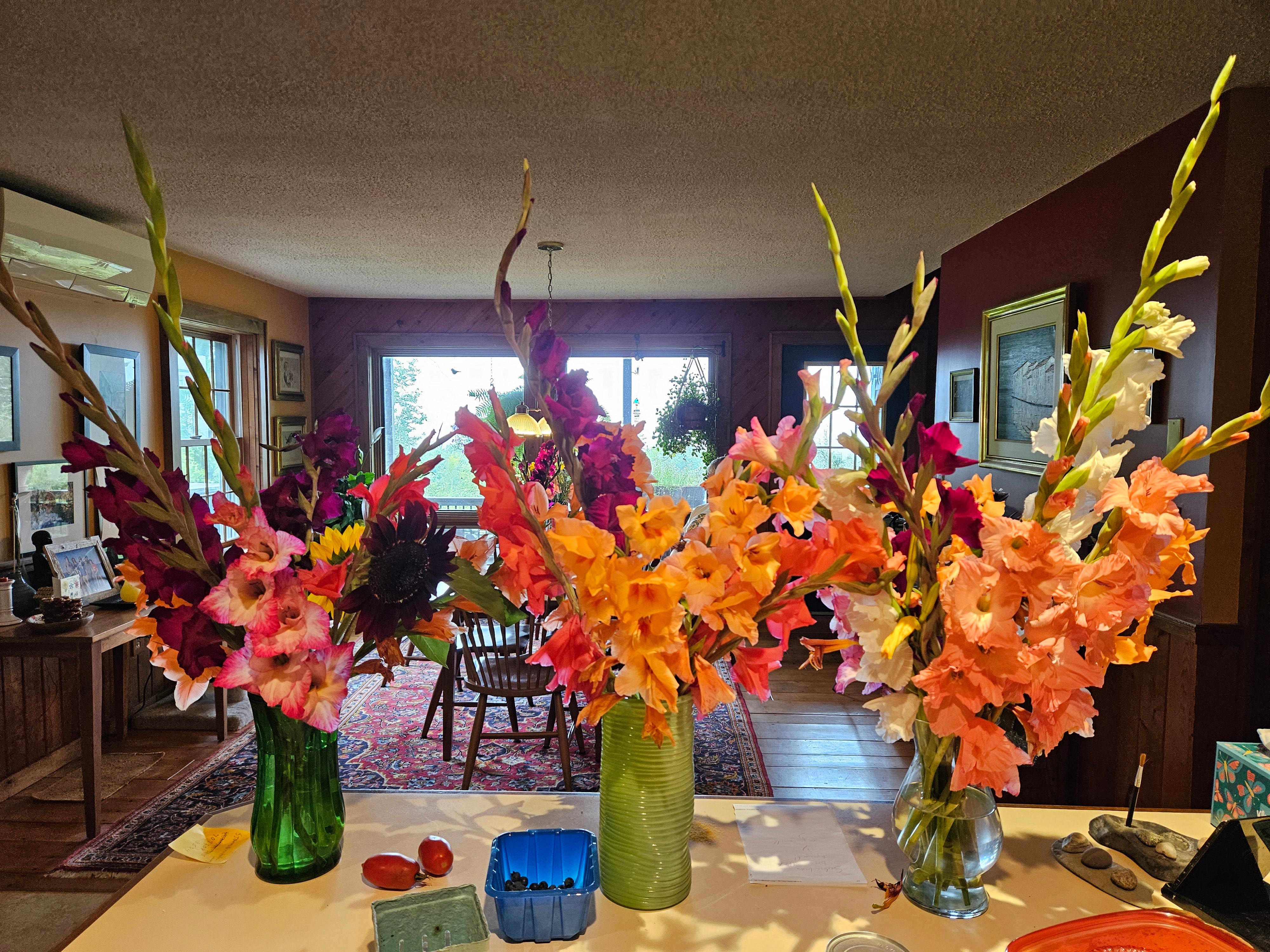
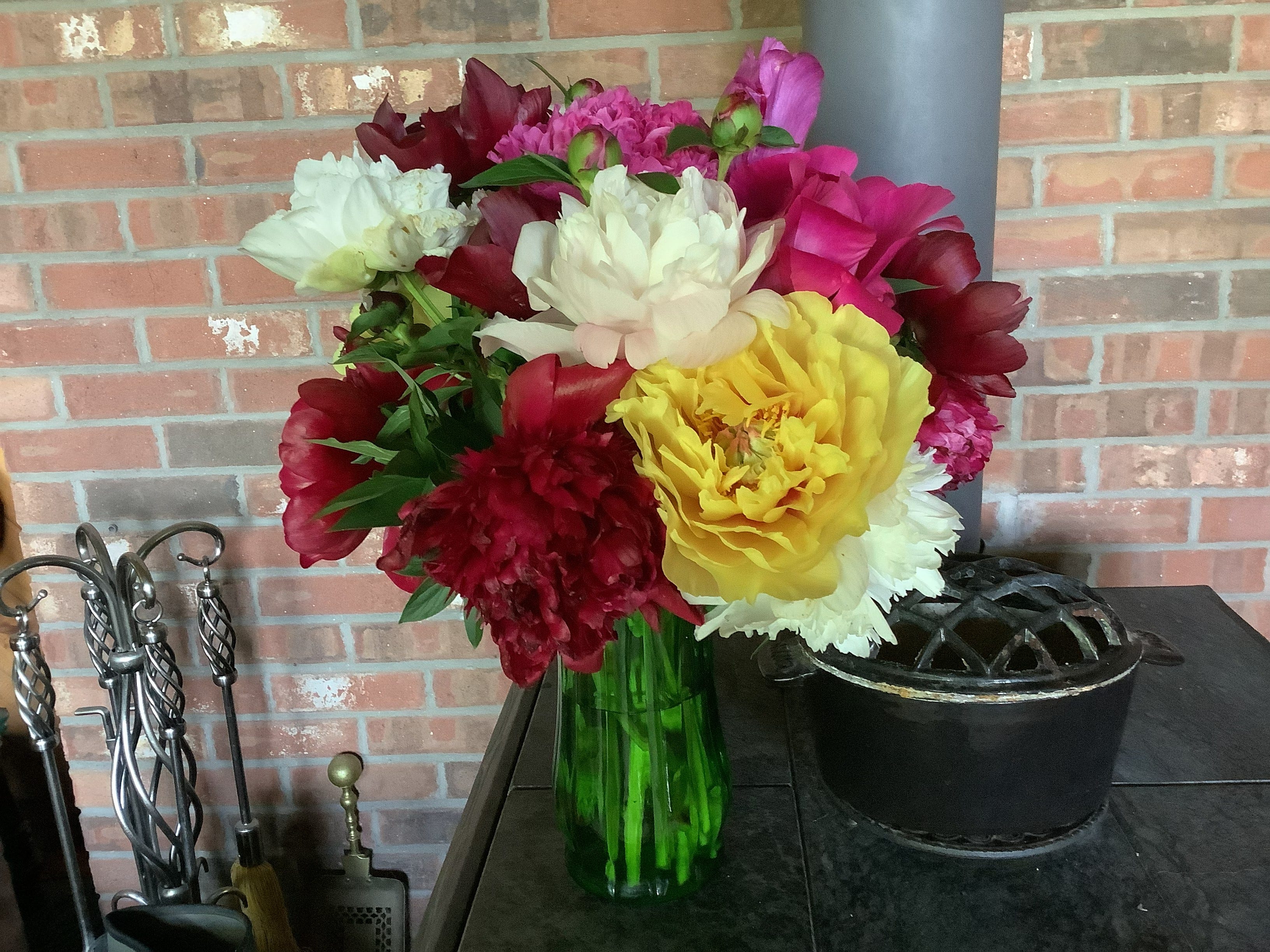
The peonies and gladiolas are more
seductive every fall.   I choose slips

of peony root with three buds full
of color that may prosper years from now.

I dig shaggy gladiola corms
plumped on slender stalks   next year’s

replacements for the tough exhausted husks
left from the thrust of color-trumpets to the sky

purple   steeped in black   regal crimson
slim white Abyssinian   lavender

that cried out to sunset orange.
Bulblets cling   intent on futures of their own.


Beauty’s nonchalant kindness
accepts the slow learning of my eyes.

A few days of October sun—they are
like gratitude   always a surprise.

I plant the slips   come in and sort the corms
possessed by past and future blooms.

I remember how I dreaded grownups
who creaked like closing doors.

Even now I fear joy might never
be allowed back through my window.

But gratitude’s a different eye that opens—
unnerving in its great permissions.

In sun   on this cold porch   I’m grateful.
Some shy part of me is always

sitting here   no wisdom   no plan   full
of psalms   no notion who I’m singing to.
Knowing that you love the earth changes you, activates you to defend and protect and celebrate. But when you feel that the earth loves you in return, that feeling transforms the relationship from a one-way street into a sacred bond.
― Robin Wall Kimmerer, Braiding Sweetgrass: Indigenous Wisdom, Scientific Knowledge, and the Teachings of Plants
Gratitude is a word used to describe very different emotional states. Don’t we need the practice of gratitude Robin Wall Kimmerer explores in her work?
Gratitude starts with profound respect and affection. It’s an essential expression of our humanity. Sometimes it can seem effortless—but it does not come cheap. Where does it come from? A sudden experience of the mystery and beauty of the world we live in? Well, sometimes…hopefully…for all of us—even if only briefly. The dogged struggle for survival when hunger, torture, oppression, and systematic injustice are our daily bread? Remarkably, sometimes…yes. Training offered by the practice, example, and loving instruction of family, community, and spiritual tradition? Truly something we do at our best.
Isn’t it amazing how words for things we cherish get weaponized? How has Respect come to mean “shut up and stay in your place,” Gratitude become “bend the knee and acknowledge our dominance”. (Isn’t it remarkable how un-grateful the world appears in Donald Trump’s version of the word.) Let’s not let our language be converted to meanings that are just forms of control.
So, let’s celebrate and practice real gratitude—which is part mindset and part mystery. It suffuses our bodies, opens our minds, and makes us tender. It is the active experience of love for our wondrous fragile earth. And it allows us to recognize life and the earth loving us in return, creating a partnership that is both within and beyond us. As Robin says, this is the fertile ground of the sacred.
So, let’s respect and care for each other as we do our peonies and gladioli, and children. This is where our democracy wants and waits to flourish.
Three notes:
Peonies can be lifelong companions. They are hardy perennials, and in spring, they bloom with riotous abundance…blooms that erupt in glory and before long, collapse. Remember to leave the fallen petals decorating the counter or table for a few more days.
Gladioli are astonishingly diverse. Blooms keep opening in sequence up the stalk. In Vermont we dig them in the fall and store the corms (after removing the husks from the corms). Farther south you can leave them to overwinter in the ground…but dig them up and replant and add compost periodically or they will become their own competition.
Children…I keep being amazed and grateful at how they pay such attention to the intimate and immediate…and also love to play and pretend—but have no fondness for pretense.


Lovely, as I've come to know Scudder's poems and comments! Thank you.
Pris
I’ve always loved your work, Scudder. This is lovely.